


Portable CO2, temperature and humidity meter
Choose your option

Choose your option

Turbidimeter Hanna HS93703POOL
Choose your option

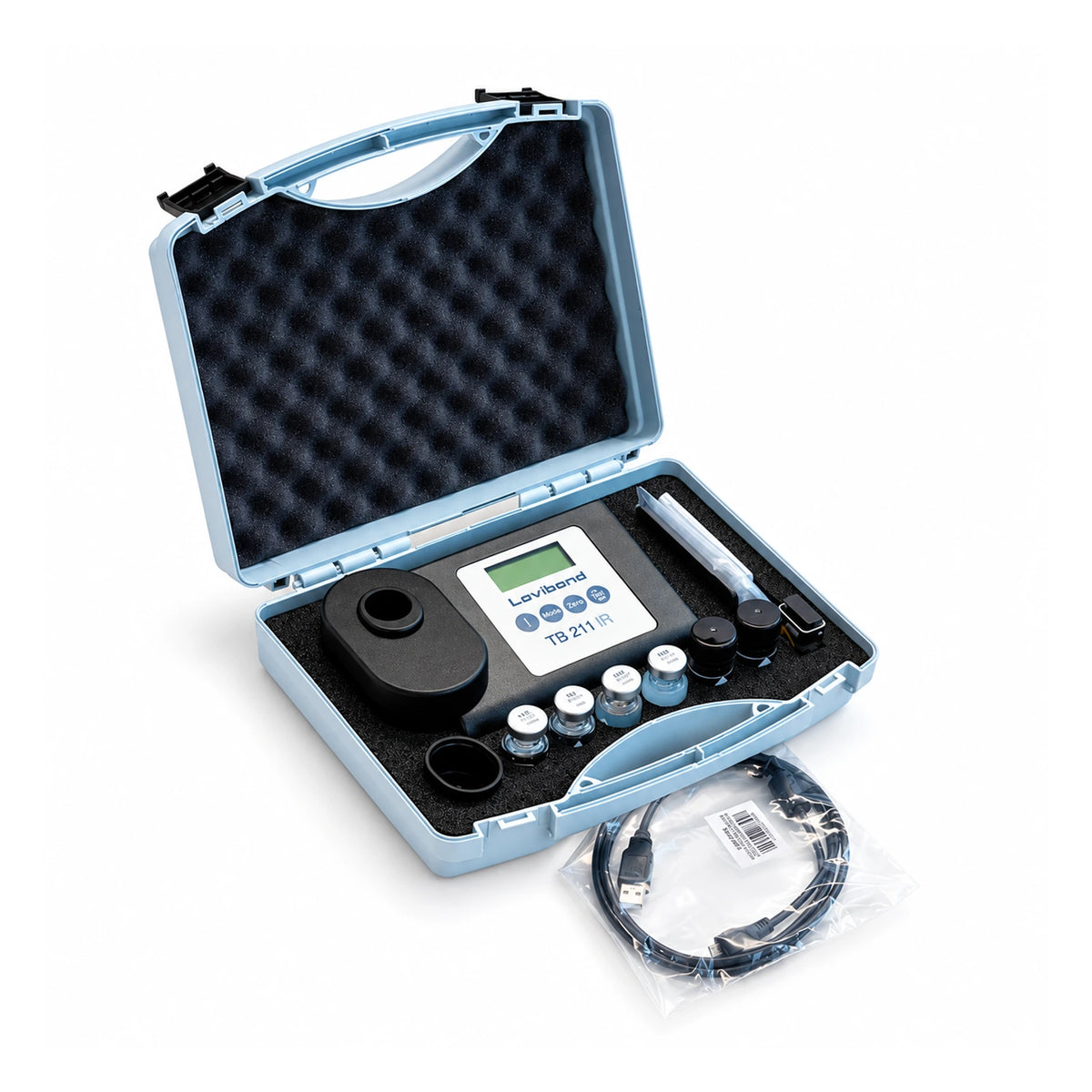
Turbidimeter Lovibond Turbicheck TB 211 IR
Choose your option

Gondo Ezdo Tub-430 Gondo Ezdo Turbidimeter
Choose your option

Calibration standard for TUM-20 turbidimeter 0 NTU
Choose your option

Calibration standard for 100NTU Turbidimeter TUM 20
Choose your option

Cubetas para turbidímetro TUM-20 (4 uds)
Choose your option


Solution Hanna Turbidity 0 NTU for HI93102 (30 ml)
Choose your option

Solution Hanna Turbidity 20 NTU for HI93102 (30 ml)
Choose your option

Solution Hanna Turbidity 0 NTU for HI93703 (30 ml)
Choose your option
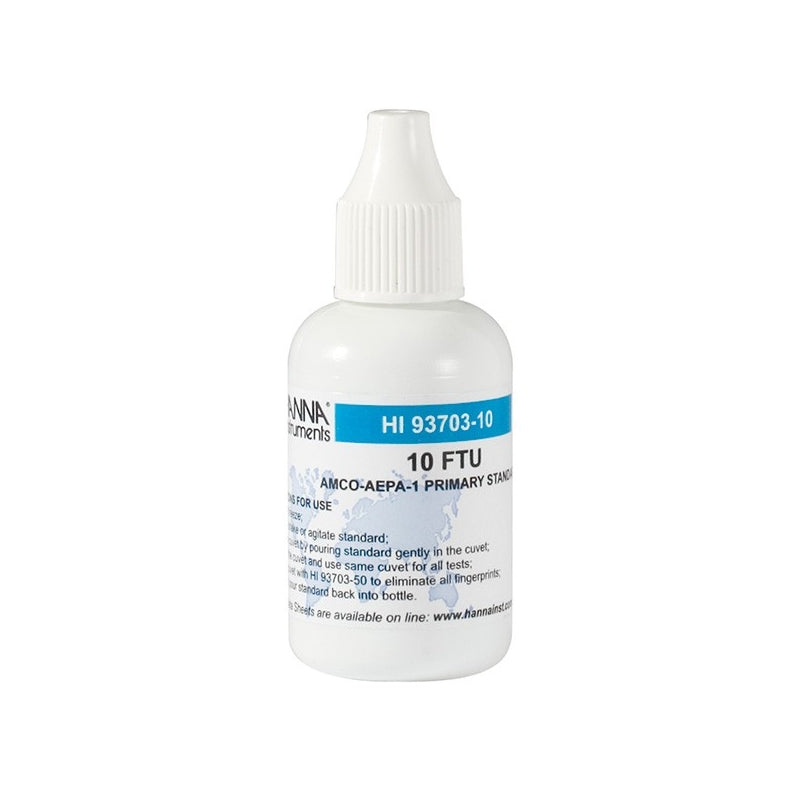
Solution Hanna Turbidity 10 NTU for HI93703 (30 ml)
Choose your option

Photometer Hanna 2 in 1 + turbidimeter HI93414-02
Choose your option

Photometer Hanna 7 in 1 + turbidimeter HI93102
Choose your option

copy of Photometer Hanna 4 in 1 Classic+Turbidity Meter Hanna Premium
Choose your option

Photometer Hanna 5 in 1 + turbidimeter HS94104M
Choose your option

Case Hanna Turbidity, Free Chlorine, pH and Temperature Measurement HS93703CLPHTEM
Choose your option


Questions and answers
what regulations govern turbidity and CO₂ levels in swimming pools?
RD 742/2013 requires turbidity
is it mandatory in public/community pools?
Yes, it is mandatory in the public sector. At the moment it is mandatory in Andalucia and Madrid
how often to calibrate?
- Turbidimeters: every 3 months with certified solutions
- CO₂: weekly check with outside air as reference
Turbidity and CO₂ meters for swimming pools: Advanced water quality control
Turbidity and CO₂ meters are essential devices for maintaining a swimming pool in optimal conditions of quality, health and comfort. These devices make it possible to analyze key parameters such as water clarity (turbidity) and the concentration of carbon dioxide (CO₂) in air, factors that directly influence the effectiveness of chemical treatment, the visual perception of the water and the safety of users.
Their use is especially recommended in community pools, public facilities, spas and sports centers, where constant water monitoring is both a functional and regulatory requirement. They are also very useful in private pools with advanced automation or those that prioritize efficient and responsible management.
why choose these products?
- They allow you to obtain measurements on turbidity and CO₂, helping to prevent problems before they become visible.
- Prevention of health risks: High turbidity can indicate the presence of organic matter, bacteria or residues, which compromises disinfection.
- Reduced operating costs: Accurate measurement avoids overuse of chemicals and improves the performance of systems such as salt chlorinators or dosing pumps.
- Legal compliance: Many regional and national regulations, especially for public pools, require detailed control of these parameters.
how do they work?
Turbidity meters:
They use nephelometric technology. They emit a beam of light through the water and measure the angle and intensity of the light that is scattered by colliding with suspended particles. The resulting reading, expressed in NTU (Nephelometric Turbidity Units), indicates the level of water clarity.
CO₂ meters:
They work by means of specific probes that calculate the concentration of carbon dioxide present in the air. This type of measurement is especially relevant in indoor pools or enclosed facilities, where the control of ambient CO₂ is essential to ensure proper ventilation and maintain safe levels for users.
Purchasing guide for turbidity and CO₂ meters for swimming pools
When it comes to maintaining a pool in optimal conditions, having reliable measuring instruments is essential. Two of the parameters that are attracting more and more interest, both for health and environmental issues, are water turbidity and CO₂ concentration. In this guide we help you choose the most suitable equipment according to your need, level of demand and budget.
CO₂ meters: simplicity and reliability in one piece
When it comes to carbon dioxide (CO₂) meters, the choice is simple: this is basic equipment, designed for functional, uncomplicated use.
Key features:
- Simple and compact design.
- Acceptable reliability for routine air quality monitoring or closed environment in technical rooms.
- No calibration option. It is not possible to recalibrate or issue verification certificates.
- Affordable price.
Recommended for:
- Users who need to monitor CO₂ levels on an ad hoc basis.
- Environments where technical traceability and official certification are not required.
Tip Quimipool: If your need is simply to check that CO₂ does not accumulate in a closed or poorly ventilated technical room, this equipment will perfectly fulfill its function.
Turbidity meters: key differences for a good choice
In the case of turbidity meters, the offer is more varied and it is worth stopping to compare.
Types of meters according to origin:
- Imported equipment (economic): Very affordable price. Ideal for spot checks or non-critical environments.
- Equipment of recognized brands (Hanna, Lovibond, etc.): Manufactured by companies specialized in water analysis. High reliability, with the possibility of periodic calibration. Access to calibration certificates (ISO, etc.) through the manufacturer itself. Official technical support, spare parts and possibility of repairs.
Conclusion: which one is best for you?
- CO₂ Meter: We only have one basic, reliable, easy-to-use and economical model. You don't need more if you just want an environmental safety indicator.
- Turbidity meter: If you're looking for something inexpensive for a spot check, choose an import kit. If you need reliability, traceability and technical support, invest in a Hanna or a Lovibond.
Explanation of technical terms
- NTU (Nephelometric Turbidity Units): A standardized scale that measures how turbid water is. The higher the value, the more suspended particles there are.
- CO₂: Amount of carbon dioxide present in the air. Affects air quality in indoor pools.
- 4-20 mA output: Type of signal used to send analog data from sensors to PLCs or controllers.
- Modbus: Industrial communication protocol widely used to integrate devices in automated control systems.


