


Swimming pool filters
Ver más Swimming pool filters
Neptuno 600 swimming pool filter filter system
Choose your option

Alaska 600 swimming pool filter
Choose your option

Choose your option

Swimming pool filter Astralpool Ice diameter 600
Choose your option

Pack filtration Skypool 600 + Aquasphere SSP 100M + Glass
Choose your option
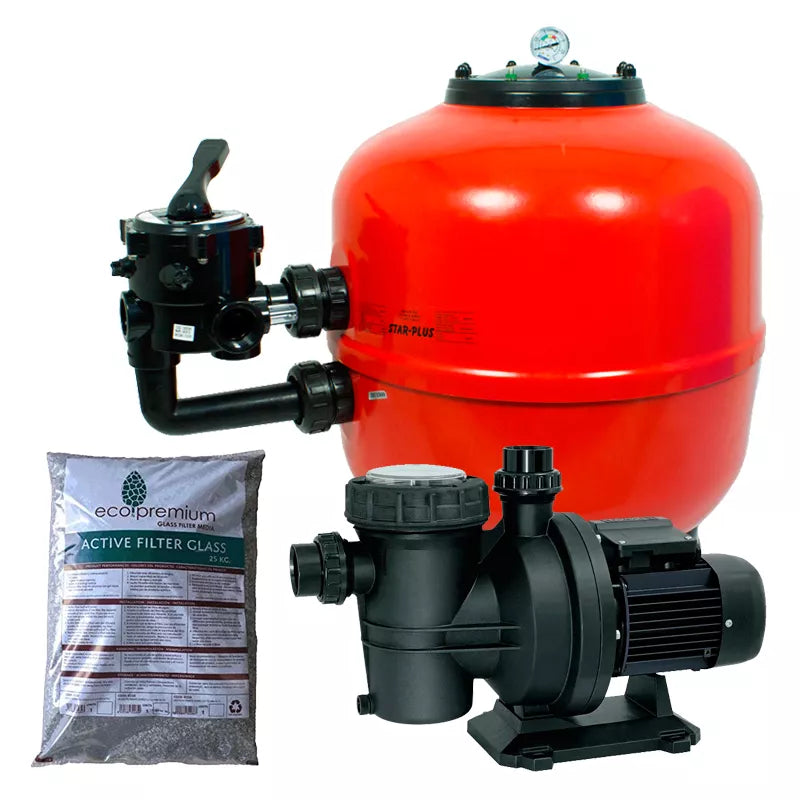
Pack filtration Star Plus 600 + Nox 100 18M + Glass
Choose your option
Cyclonic Filters

Choose your option

Choose your option

Hydrospin Pre-filter wall installation kit
Choose your option
Selector valves for filters
Ver más Selector valves for filters
1" 1/2 side selector valve Coral with filter connections
Choose your option

2" side selector valve Coral with filter linkages
Choose your option

Choose your option

Selector valve 1" 1/2 Astralpool Classic Plus 73950 with filter links 00599
Choose your option

Selector valve 1" 1/2 lateral Coral without links
Choose your option

2" side selector valve Coral without linkages
Choose your option
Industrial swimming pool filters
Ver más Industrial swimming pool filters
Choose your option

Industrial filter diameter 1.200
Choose your option

Industrial filter diameter 1.400
Choose your option

Industrial filter diameter 1.600
Choose your option

Industrial filter diameter 1.800
Choose your option

Industrial filter diameter 2.000
Choose your option
Swimming pool filtration equipment
Ver más Swimming pool filtration equipment
ESPA Elevated Filter House FKP 520 with pump 0.75 hp
Choose your option

ESPA Elevated Filter House FKP 620 with pump 1 hp
Choose your option

ESPA Underground Filter House FKP 520 with pump 0.75 hp
Choose your option

ESPA Underground Filter House FKP 620 with pump 1 hp
Choose your option

Surface hut Neptune 600 Hayward 1 HP
Choose your option

Choose your option
Filter loads
Ver más Filter loads
AFM mixed grade active filter glass in 11 kg
Choose your option

Silex swimming pool sand grain size 0,4-0,8 mm
Choose your option

Filter Glass 0,5-1 mm TYPE 1 in 25 Kg
Choose your option

AFM active filter glass grade-1 in 21 kg
Choose your option

AFM active filter glass grade-2 in 21 kg
Choose your option

AFM Grade-3 active filter glass in 21 kg
Choose your option
Swimming Pool Flowmeters
Ver más Swimming Pool Flowmeters
Flow meter FlowVis Dn40 (50 mm glued) with non-return valve
Choose your option

Flowmeter FlowVis Dn50 (63 mm glued) with non-return valve
Choose your option

Flowmeter FlowVis Dn80 (90 mm glued) with non-return valve
Choose your option

Flowmeter FlowVis Dn100 (110 mm glued) with non-return valve
Choose your option

Flow meter TOP 1 1/2", range 4.6 to 13.5 m3/h
Choose your option

TOP 2" flow meter, range 9.5 to 31 m3/h
Choose your option
PVC Accessories
Ver más PVC Accessories
Hidroten SNS D.50 - 1" 1/2" triple probe holder
Choose your option

Hidroten SNS D.63 - 1" 1/2" triple probe holder
Choose your option

Choose your option

Choose your option

Choose your option

Choose your option
Explore other categories


Questions and answers
The pool purifier or filter
It is one of the parts in charge of maintaining the water clean and in optimal conditions for the bath. Its main function is to retain the physical dirt present in the water and return it filtered to the pool.
why choose a filtering system for swimming pools?
Prevents water from "stagnating": Filtration is essential for good water quality, as it prevents the accumulation of bacteria and contamination. A good filtration will treat 80-90% of the impurities in the pool water.
how do swimming pool filtration systems work?
Filtration works by circulating water through a filter by means of a motor. During this process, contaminating particles are retained in the filter material, while clean water is returned to the pool.
This system ensures constant water quality, considerably reducing the need for additional chemical treatments.
The filtration circuit includes: skimmer, skimmer intake, bottom, filtration pump and delivery nozzles.
how to size the filtration system?
It is based on the volume of the pool to determine the minimum filtration requirement. Basic rule: recycle the entire volume of water in about 4 hours.
Calculation: Pool volume / 4 hours = filtration flow rate (m³/h)
Example: 60 m³ pool / 4 = 15 m³/h
how to choose the equipment?
- Choose the pump: According to pressure/flow curve and pressure drop. Consult the manufacturer's pump curves.
- Choosing the filter: Depending on the selected pump.
Main characteristics of the purifiers for swimming pools
Available filter types
Sand/glass filter
- Filter media: sand or glass
- Fineness: 30-50 μm (sand), 20-30 μm (glass)
- Advantages: Economical, easy to use and clean. More durable glass.
- Disadvantages: More complex installation.
- Use: Suitable for all types of pools.
Cartridge filter
- Medium: synthetic fiber cartridge
- Fineness: 10-30 μm
- Advantages: Easy to install, low water consumption.
- Disadvantages: Expensive cartridges. Frequent cleaning required.
Diatomaceous earth filter
- Medium: fossilized algae powder
- Fineness: 5-10 μm
- Advantages: Excellent fineness, no flocculant needed.
- Disadvantages: High cost, more complex use.
Other outstanding features
- Filtration capacity: From compact to powerful models.
- Energy efficiency: Low consumption pumps.
- Technological innovations: Self-cleaning, automatic backwash, intelligent control.
- Pump/filter combination: Essential for optimum hydraulic performance.
how long to filter?
- Depends on temperature, dirt and frequency of use.
- Start of season: 1 recycle/day.
- Summer: 2 recycles/day.
- Rule of thumb: Water temperature / 2 = hours of daily filtering.
- Recommendation: change 1/3 of the water every year.
Special case: variable speed pump
Lower speed, but prolonged filtration.
Example: Pump 1500 RPM → 8 m³/h → 60 / 8 = 7.5 h → x2 = 15 h/day.
Key technical concepts explained
- Filtration capacity: Water processed per hour.
- Cleaning: Backwashing to remove debris from the filter.
- Filter material: Sand, glass, cartridge, diatomaceous earth.
- Filtration rate: m³/h/m². Too high = inefficient filtration. Too low = insufficient.
Filtration and variable speed pumps
Revolutionize the system by allowing more efficient flow control.
Benefits
- Energy savings of up to 80%
- More efficient filtration
- Longer equipment life
- Reduced noise
- Adaptability and intelligent programming


