


Choose your option

Photometer Lovibond MD150 6 in 1 with Bluetooth
Choose your option
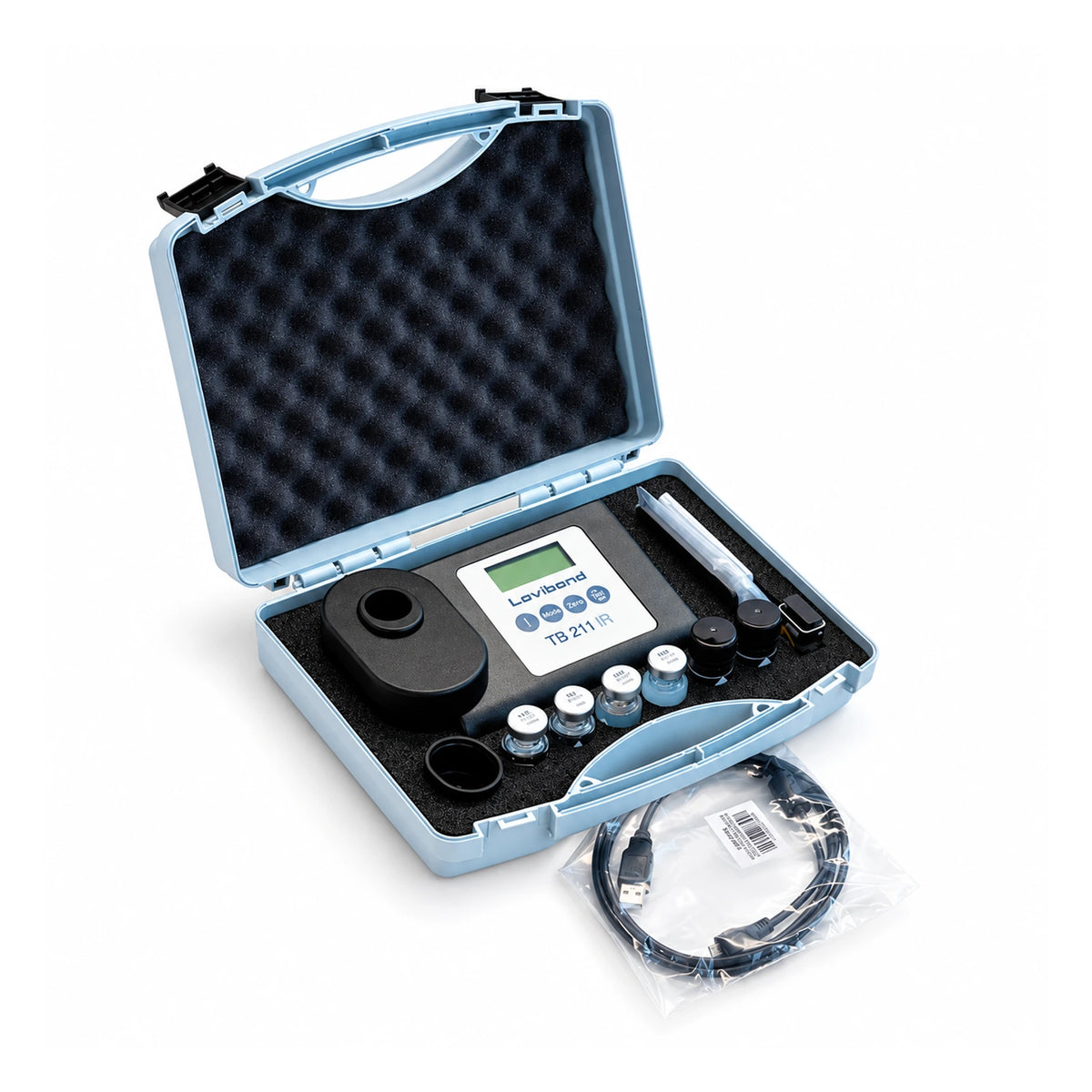
Turbidimeter Lovibond Turbicheck TB 211 IR
Choose your option


Photometer Lovibond MD200 3 in 1
Choose your option

Photometer Lovibond MD200 5 in 1
Choose your option

Photometer Lovibond MD200 6 in 1
Choose your option

Standard reference kit PH MD100 - MD200
Choose your option

Standard chlorine reference kit MD100 - MD200
Choose your option


Lovibond SD10 pH Medidor portátil de pH
Choose your option

Lovibond SD20 ORP Medidor portátil de ORP
Choose your option

Lovibond SD30 EC Medidor portátil de conductividad, salinidad, TDS y temperatura
Choose your option

Lovibond SD40 Multi Medidor portátil multiparamétrico
Choose your option

Choose your option

Choose your option

Turbidity measuring standard 0,1-800 NTU T-CAL for Lovibond Turbicheck
Choose your option

Plastic stirring rod for photometer
Choose your option

Turbichek Turbidimeter Cells Lovibond D.24mm H.55mm (unit)
Choose your option

Photometer cuvettes Lovibond
Choose your option
Questions and answers
Which Lovibond photometer do I need for a public swimming pool, according to Royal Decree 742/2013?
Recommended minimum configuration:
- MD200 5-in-1: free chlorine, total chlorine, pH, alkalinity, and cyanuric acid
- Turbicheck TB 211 IR Turbidimeter: to comply with mandatory turbidity measurements
This combination covers the chemical and sanitary parameters required by national regulations (RD 742/2013) and by most regional regulations.
If the pool uses salt electrolysis, it is advisable to add:
- SD30 EC Meter: for routine monitoring of conductivity and TDS without using test strips
Essential accessories: automated dosing pumps and a logbook signed by the technical supervisor.
What is the difference between the MD200 and the MD150?
The two product lines address different needs:
- MD200: a well-established, rugged, IP68-rated line designed for heavy-duty use in the field and at public pools, with full regulatory compliance
- MD150 6-in-1: newer, lighter, and features Bluetooth to send readings directly to the AquaLX app Lovibond
Quick decision:
- Proven traceability + long-term field durability → MD200
- Mobile-first workflow + client reporting via the app → MD150 BT
Are DPD " Lovibond " tablets compatible with photometers from other brands?
Technically, yes, chemical reactions are universal:
- DPD for chlorine
- Phenol Red for pH
Other brands use the same principles. But each photometer is factory-calibrated with a specific reagent, and there are subtle differences between brands:
- Wavelength
- Reaction time
- Reagent concentration
Consequences of mixing brands:
- Plausible but decalibrated readings
- Voids documentary traceability in the event of an audit
Decision:
- Home use: they work
- Professional use with a logbook: best avoided
How often should an MD200 be calibrated?
Lovibond Recommends annual recalibration using the standard chlorine and pH reference kits (sold separately).
Regulations for public pools:
- Documented annual calibration: required by the inspector
- Between formal calibrations, perform monthly verification against a known standard and record the result
Recalibration is also necessary after:
- A fall or impact
- Accidental wetting
- Several months of non-use
For home pools, the schedule is more relaxed: recalibrating at the start of each season is usually sufficient.
Can the Scuba 3s be used in a public pool?
It's not the best option. The Scuba 3s is a pocket-sized photometer that measures three basic parameters:
- Its readings are reliable
- But it does not allow for formal recalibration
- It does not issue certificates
- It does not measure alkalinity or cyanuric acid, which are required in many autonomous communities
Ideal uses for the Scuba 3s:
- Backup equipment in the pool maintenance technician’s van
- Small community pools not subject to regulatory requirements
- Advanced residential pools
For public pools with a logbook, the MD200 5-in-1 is the minimum professional requirement.
What is the difference between the Turbicheck and a chemical photometer?
These are complementary devices, not substitutes:
- Turbicheck TB 211 IR: measures turbidity by 90° light scattering (nephelometric method, ISO 7027), a method required by water regulations. Detects suspended particles.
- Chemical photometers (MD200, MD150): measure transmittance following a reaction with a reagent. This principle is suitable for chlorine, pH, alkalinity, cyanuric acid, etc.
Key differences:
- The Turbicheck does NOT measure chlorine, pH, or other chemical parameters
- The MD200 does NOT measure turbidity
For public swimming pools, you need both devices.
Does the SD series from Lovibond also use reactive pads?
No. The SD series (SD10, SD20, SD30, SD40) are electronic potentiometric meters with an electrode; they are not photometers.
Operation:
- They measure by direct contact of an electrode with the sample
- Parameters: electrochemical pH, ORP (redox potential), conductivity via a measuring cell
Consumables:
- They do not use reagent tablets
- They do consume electrode refill electrolyte
- And periodic calibration solutions
Pros and cons compared to photometers:
- Advantage: speed for repetitive measurements
- Disadvantage: the electrodes have a limited lifespan (typically 1–2 years of intensive use) and are replaced as a component
For complementary analysis, see also digital meters.
Where can I buy DPD No. 1 and No. 3 pads for my MD200?
At Quimipool, you can find the complete catalog in the “Photometer Reagents” section: Lovibond:
- DPD No. 1: free chlorine
- DPD No. 3: total chlorine
- Phenol Red: pH
- CYA Test: cyanuric acid
- Alkalinity-M: alkalinity
Available in packs of 100 or 500 units.
Proper storage:
- Store in a cool, dry, dark place
- Best used within 12 months after opening the package
For inquiries, contact technical support or use the contact form.
Lovibond Photometers for Swimming Pools: The European Standard for Water Analysis
If you walk into the equipment room of any public swimming pool in Spain and open the logbook cabinet, there’s a very high probability that you’ll see a Lovibond photometer right next to the logbook. The German company Tintometer GmbH, owner of Lovibond, has been manufacturing colorimetric water measurement equipment for over a century—since 1885, to be exact—and at Espa, it has become the de facto standard for the analysis required by Royal Decree 742/2013 and equivalent regional regulations.
On this page, you’ll find the Lovibond line of pool testing equipment distributed by Quimipool, ranging from the pocket-sized Scuba 3s to the desktop MD200 6-in-1, including the Bluetooth-enabled MD150, the Turbicheck TB 211 IR turbidimeter, and the SD series of electronic meters. The difference from other brands isn’t in the technology (the photometry is based on the same physics); it lies in document traceability and adoption within the professional sector.
Why Lovibond and for whom
Three features set Lovibond apart from Hanna or PrimeLab:
- Traceability and regulatory compliance. Lovibond photometers are factory-calibrated using DIN/ISO standards and issue calibration certificates accepted by regional health authorities. It’s the go-to brand when an inspector asks to see documentation.
- Lovibond test tablets. DPD No. 1, DPD No. 3, Phenol Red, and the like are generic names in the industry: any pool maintenance professional with five years of experience knows them by heart. That means universal compatibility and a steady supply—you can find Lovibond test tablets at any pool supply dealer in the country.
- Field-Proven Durability. The IP68-sealed housings of the MD200 series, the one-handed Scuba models, and the durability of the SD models are designed for 200 pools a year—not just a single private pool. If you use them daily, you’ll notice the difference within two summers.
Lovibond It’s the natural choice for professional pool maintenance providers, large homeowners’ associations, hotels, hospitals, sports facilities, and public pools. It’s also suitable for private pools, but in that case, Hanna and PrimeLab offer better value for money for home users.
How a Photometer Works Lovibond
The physics are the same as in any chemical photometer: the device emits light at a specific wavelength (typically 530 nm for DPD chlorine, 560 nm for pH Phenol Red, 590–660 nm for other parameters), the light passes through a cuvette containing the water sample treated with the reagent, and a sensor measures how much light is absorbed by the developed color. Beer-Lambert’s law relates absorbance to concentration, and the display shows the result directly in ppm or mg/L.
Where Lovibond makes a difference is in the optical stability of the LED and the light source —the MD200 models maintain calibration for years without noticeable drift—and in the traceability of the reagent: each batch of Lovibond tablets comes with a batch number and expiration date printed on the packaging, information required for health inspections.
Compared to test strips and visual disc-type tablet comparators, the advantages are the same as with any photometer: repeatability, resolution (0.01 ppm for chlorine), and the absence of operator bias. You’ll find more details on the photometric mechanism in the general section on pool water analysis.
Lovibond ’s pool product line: which model to choose
Scuba 3s: the pocket photometer
Small, lightweight, single-button operation. The Scuba 3s measures three basic parameters (free chlorine, total chlorine, and pH) using DPD and Phenol Red test strips. It’s the natural replacement for the visual disc-type comparator that pool maintenance technicians have carried in their pockets for years. It costs around €109, making it the most affordable entry point into photometry from a reputable brand.
It’s chosen by pool maintenance pros who want a backup unit in their van, discerning homeowners switching from test strips, and technical service providers for small pools where an MD200 isn’t justified.
MD150: Portable with Bluetooth
This is the latest model, designed for pool maintenance professionals who already use a mobile app. The 6-in-1 MD150 with Bluetooth measures free chlorine, total chlorine, pH, alkalinity, cyanuric acid, and a sixth configurable parameter, and transmits each reading via Bluetooth to the AquaLX app at Lovibond, where they are logged with the date, time, and geolocation. It costs around €719. If your workflow is mobile-first and you need automatic reporting for clients, this model or a PrimeLab are your two options.
MD200: The Workhorse of Public Pools
It is , without a doubt , the best-selling Lovibond photometer on Espa. It can be used as either a benchtop or portable unit, features a rugged IP68-rated housing, a backlit display, battery power, and recalibratable calibration using reference standards. Three configurations based on parameters:
- MD200 3-in-1 (~€619): free chlorine, total chlorine, pH. The basic configuration for the logbook. Top seller.
- MD200 5-in-1 (~€899): adds alkalinity and cyanuric acid.
- MD200 6-in-1 (~€949): adds a sixth parameter of your choice (typically calcium hardness or bromine).
For public neighborhood pools, large residential complexes, hotels, and most facilities that need to comply with regulations, the MD200 5-in-1 is the standard choice. Choose the 6-in-1 only if you regularly measure calcium hardness or use bromine.
Turbicheck TB 211 IR: Regulatory Turbidity Meter
The Turbicheck TB 211 IR measures turbidity using the infrared nephelometric method, in accordance with ISO 7027 and equivalent DIN standards. It is the mandatory complement to the MD200 when the facility is subject to public health oversight in Espa: turbidity is a parameter required by Royal Decree 742/2013, and a conventional chemical photometer does not measure it. ~€895.
Model-specific T-CAL standards ranging from 0.1 to 800 NTU are used for calibration; these are also available at Quimipool.
SD Series: Portable Electronic Meters (Non-Photometric)
Please note this important distinction: the SD series from Lovibond are not photometers; they are electronic meters with electrodes. They serve a different purpose and are complementary. They are useful when you need continuous or very frequent measurements of a specific parameter without using up reagent tablets for each analysis.
- SD10 pH (~€239): electronic pH meter with electrode, continuous reading, accuracy ±0.01.
- SD20 ORP (~€279): oxidation-reduction potential (redox) meter—a useful parameter for validating the disinfecting activity of chlorine.
- SD30 EC (~€229): electrical conductivity, salinity, TDS, and temperature. Essential if you work with salt chlorinators.
- SD40 Multi (~€329): multiparameter meter; swap out the electrode as needed.
When should you use an SD meter instead of a photometer? When you’re going to measure the same parameter dozens of times a day (online process monitoring, chlorinator calibration, comparative analysis). A photometer uses one test strip per test; an SD meter only requires electrode electrolyte and periodic calibration.
Parameters covered by the product line Lovibond
With the combination of MD200 + Turbicheck + SD30, you cover virtually all parameters required in Spanish public swimming pools:
- Disinfectants: free chlorine, total chlorine (and, by default, combined chlorine), bromine, ozone
- Chemical balance: pH, total alkalinity, cyanuric acid/stabilizer, calcium hardness
- Salt electrolysis: conductivity (EC), salinity, TDS
- Sanitary quality: turbidity (Turbicheck), ORP (oxidation-reduction potential)
- Support: water temperature, iron, copper, phosphates (with advanced MD200 multiparameter meters)
Reagents, test strips, and standards: the ecosystem Lovibond
The equipment is half the analysis. The other half consists of Lovibond test tablets and calibration standards. At Quimipool, you’ll find the entire ecosystem:
- Lovibond photometer reagents: complete catalog of test strips (DPD No. 1, DPD No. 3, Phenol Red, Calcium, CYA-Test, Alkalinity-M, and the rest of the line), powders, and liquid reagents for all MD150, MD200, and Scuba models.
- Standard reference kits for recalibrating the MD100 and MD200 for chlorine and pH. These allow you to verify that the equipment is still reading correctly after a shock or a long period of inactivity.
- Calibration standards: pH, chlorine, and T-CAL for turbidity. Essential for maintaining documentary traceability.
- Replacement cuvettes specifically for photometers and turbidimeters (those for the Turbicheck are different and not interchangeable).
- Plasticstirring rod to prevent sample contamination when dissolving the tablets.
Golden rule: an original Lovibond tablet costs what it costs (cents per test) and is what guarantees the reading. Generic tablets from other brands provide plausible readings but are not traceable; during a health inspection, they can invalidate the entire record.
Lovibond Hanna vs. PrimeLab
All three brands are reliable and provide accurate measurements when used correctly. The differences lie in their positioning:
- Lovibond It is the professional option with regulatory compliance and documented traceability. Long-standing, robust, and ubiquitous in Spanish public swimming pools. Test strips are available from any distributor.
- Hanna Instruments offers the best low-cost line (Checker HC) and excellent value for money in multiparameter testers. More geared toward home and semi-professional use.
- PrimeLab is the most modern option in terms of connectivity: Bluetooth to an app, automatic logging—ideal for maintenance technicians with large fleets who report to clients via mobile. Lovibond has responded to this with the MD150 BT, but PrimeLab was born mobile-first.
If your end customer is a public facility or a homeowners’ association with a demanding president, Lovibond is the safe bet. If it’s a private individual with a family pool, Hanna probably offers more value for the money. If you’re a modern pool maintenance professional and want automatic reporting to the customer, compare the MD150 BT and PrimeLab.
Quimipool Astralpool also distributes photometers and other digital pool meters if you’d like to explore alternatives.
Maintenance and Common Mistakes
Four tips from technical support:
- Test cells: Always keep them clean and free of scratches. The MD200’s test cells are square, and the optical surface will get scratched if you load them with the tablets inside and stir with a metal rod. Use the original plastic stirring rod.
- Make surethe tablet is completely dissolved before taking a reading. Crush the tablet with the stirrer, wait for the time indicated in the instructions (typically 1 minute for DPD chlorine, 2 minutes for CYA), and only then press “read.”
- Perform the zero/blank calibration using a sample from the pool itself, not distilled water. The MD200 correctsfor the water’s natural color if you perform the blank calibration with the sample before adding the reagent. This is what distinguishes a good reading from an approximate one.
- Recalibrate every 12 months using the standard reference kits. In public pools with a logbook, it is mandatory to keep a written record of the calibration.
And if the reading seems impossible: do not add any product before repeating the test with a tablet from another box. Nine times out of ten, it’s due to an old or improperly stored reagent.
Find your photometer at Lovibond in the list above and filter by number of parameters or equipment type. Free shipping on orders over €150, with standard delivery within 24–48 hours on the Spanish mainland. If your system has a logbook and you’d like advice on the required configuration for your autonomous community, call 91 128 55 90 or contact us via the contact form: our technical team is available Monday through Friday during business hours.


