


Analyser Cases
Ver más Analyser Cases
Set of test strips 4 parameters
Choose your option

Choose your option

Drinking water hardness test kit
Choose your option

Test strips 4 parameters: Bromine
Choose your option

Choose your option

Test strips Aquachek for salt analysis
Choose your option
Digital Swimming Pool Meters
Ver más Digital Swimming Pool Meters
Smart Analyzer Zodiac Blue Connect Silver
Choose your option

Smart Analyzer Zodiac Blue Connect Gold
Choose your option

Choose your option

Choose your option

Hanna Checker HI 701 Free Chlorine Analyser
Choose your option

Hanna Checker HI 780 pH analyser
Choose your option
Swimming pool thermometers
Ver más Swimming pool thermometers
Compact thermometer with penetration probe Hanna Checktemp
Choose your option

Compact thermometer with 1m cable Hanna Checktemp
Choose your option

Blue ABS swimming pool thermometer 15,34 cm
Choose your option

Choose your option

Choose your option

Floating thermometer yellow fish
Choose your option
Turbidity and CO2 meters
Ver más Turbidity and CO2 meters
Portable CO2, temperature and humidity meter
Choose your option

Choose your option

Turbidimeter Hanna HS93703POOL
Choose your option
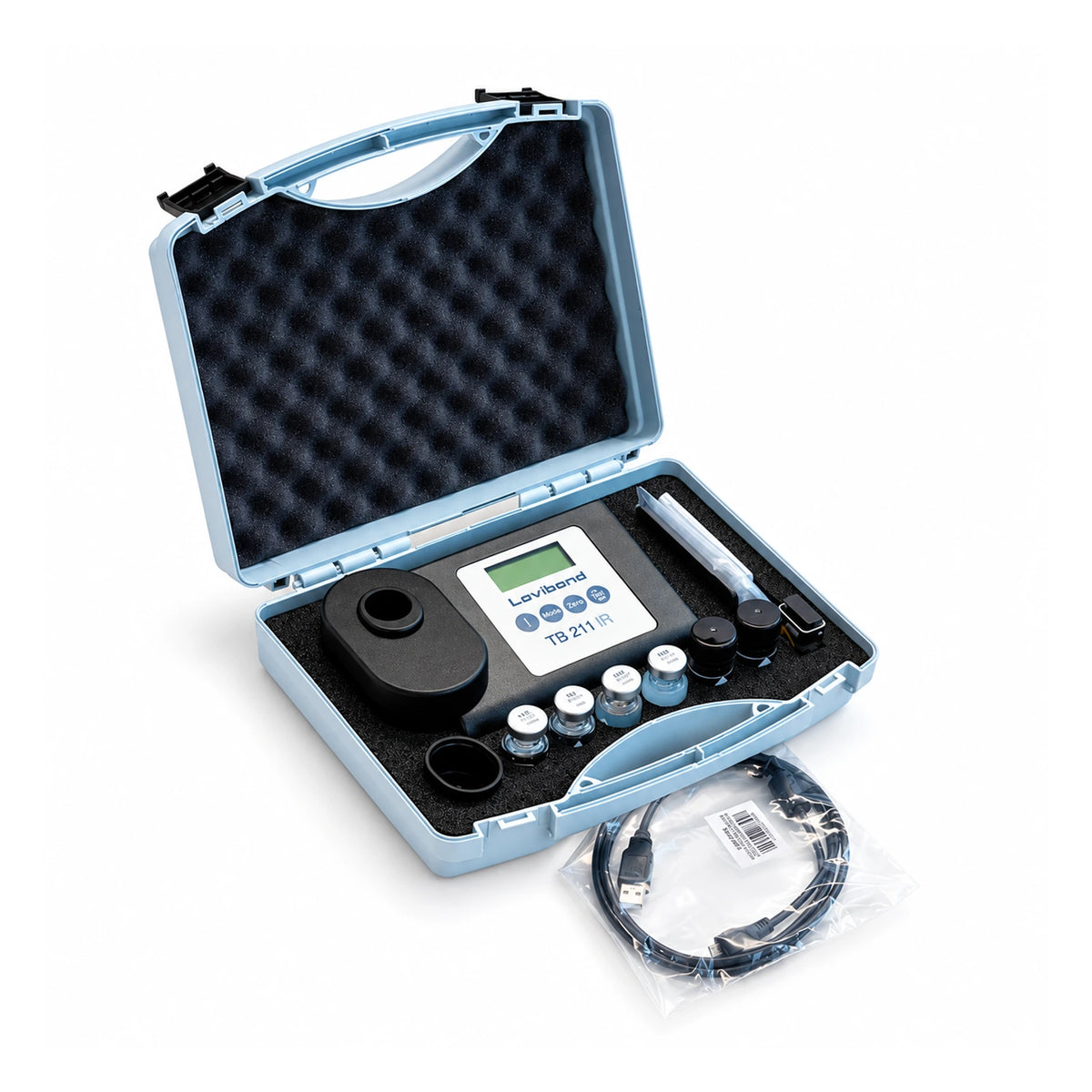
Turbidimeter Lovibond Turbicheck TB 211 IR
Choose your option

Gondo Ezdo Tub-430 Gondo Ezdo Turbidimeter
Choose your option

Calibration standard for TUM-20 turbidimeter 0 NTU
Choose your option
Swimming pool photometers
Ver más Swimming pool photometers
Hanna Checker HI 701 Free Chlorine Analyser
Choose your option
Hanna Checker HI 780 pH analyser
Choose your option
Choose your option

Case Hanna Chlorine and pH Measurement
Choose your option

Photometer Hanna Classic 5 in 1 HI97104M
Choose your option
Choose your option
Reagents and accessories for photometers
Ver más Reagents and accessories for photometers
Glass cuvettes and cuvette lids for checker, 2 pcs
Choose your option

Liquid reagent Hanna for Free Chlorine 300 test
Choose your option

Reagent powder Hanna Free Chlorine 300 test
Choose your option

Reagent powder Hanna for Total Chlorine 100 tests
Choose your option

Liquid reagent Hanna for pH 100 test
Choose your option

Reagent powder Hanna Cyanuric acid 100 test
Choose your option
Explore other categories


Questions and answers
what parameters do I need to measure?
- pH: Measures the acidity or alkalinity of the water. The ideal range is between 7.2 and 7.612.
- Free chlorine: This is the active disinfectant in the water. The optimum level is usually between 1 and 1.5 ppm (parts per million)
- Total chlorine: Includes both free and combined chlorine Alkalinity: Helps stabilize pH. Recommended range is 80 to 150 ppm
- Calcium hardness: Measures the concentration of calcium minerals. The ideal level is between 200 and 400 ppm
- Cyanuric acid (stabilizer): Helps keep chlorine stable under sunlight.
- ORP (Oxidation Reduction Potential): Measures the disinfectant capacity of the water.
Also, depending on the type of pool and treatment, you may need to measure:
- Salinity: For pools with saline chlorination.
- Phosphates: Can contribute to algae growth.
- Metals: Such as copper or iron, which can cause staining.
what level of accuracy do I require?
- Test strips: Accuracy of ±10-20%, suitable for quick controls.
- Cases: Accuracy of ±5-10%, require more skill but are more accurate than strips.
- Digital meters: Accuracy ±1-3%, excellent for specific parameters such as pH or ORP.
- Photometers: Accuracy of ±2-5%, ideal for professional measurements or public pools.
how often will I test?
- Occasional home use: 1-2 times per week, strips or liquid kits are sufficient. We recommend measuring the salt level every month.
- Intensive or commercial use: Daily or several times a day, photometers or digital meters are more appropriate.
- Public pools: According to local regulations, usually several times a day with high precision equipment.
what is my budget?
- Test strips: 10-30€ for 50-100 strips.
- Kits: 30-100€ for basic kits.
- Digital meters: 50-500€ per individual device (pH, ORP, etc.).
- Photometers: 200-1000€ depending on complexity and parameters measured
which measurement system is compatible with my pool?
The choice of the measurement system for the analysis of your pool water depends not so much on the type of disinfection you use (chlorine, bromine, saline, active oxygen, etc.), but on the level of precision and speed you need in the measurement.
All measurement systems are compatible with any type of treatment, but there are differences in terms of reliability, ease of use and cost.
which metering system is ideal for your pool?
To choose the right system, you should consider:
The accuracy you need:
For basic maintenance, analytical strips may be sufficient.
If you are looking for more accuracy, a digital meter or photometer is the best choice.
Speed of measurement:
Manual strips and kits offer quick results in seconds or minutes. Photometers and digital meters require a little more time, but offer greater reliability.
Frequency of analysis:
If you test your water frequently, a fast, easy-to-use system will be key. If you need precise analysis, you might opt for photometers.
how are samples taken correctly?
- Sampling point: 20 cm deep and 30 cm from the wall, away from water inlets. We recommend in the middle of the pool.
- Time: Preferably at the same time of day, avoiding periods of maximum use.
- Container: Use clean containers rinsed with pool water.
why is it important to keep the pH of water within the range 7.2 - 7.4?
The pH is a fundamental parameter for the chemical balance of the pool water. Keeping it within the range of 7.2 to 7.4 is crucial because:
- It ensures the effectiveness of chlorine: If the pH is outside this range, chlorine loses its disinfecting power.
- It avoids skin and eye irritations: An incorrect pH can cause discomfort to swimmers.
- Prevents scaling or corrosion: A high pH favors the accumulation of salts, while a low pH can corrode metal elements in the pool.
- Improves water quality: A stable pH reduces turbidity and improves water clarity
what happens if the pH is too high or too low?
If the pH is too high (>7.8):
- Chlorine effectiveness is reduced, allowing bacteria and algae to grow.
- May cause eye and skin irritation. Increases water turbidity.
- Encourages the formation of calcium scale in pipes and equipment.
- Can clog filters and reduce the efficiency of the recirculation system.
If the pH is too low (
- Increases the aggressiveness of the water, which can cause corrosion in pipes, pumps and metal fittings.
- May cause irritation to the eyes, skin and mucous membranes of bathers.
- Makes chlorine more aggressive and consumed faster, generating strong odors and affecting the chemical stability of the water.
how does pH affect the effectiveness of chlorine?
The pH has a direct relationship to the effectiveness of chlorine in water.
How pH influences the disinfecting power of chlorine:
- At pH 7.2, about 66% of the chlorine is in its most effective form (hypochlorous acid, HOCl).
- At pH 7.6, only 42% of the chlorine is active.
- At pH 8.0, chlorine efficiency drops to 25%.
If the pH is high (>7.8):
- More hypochlorite (ClO-) is formed, which is less effective than hypochlorous acid (HOCl).
- This means that, even if there is enough chlorine in the water, its disinfection capacity will be lower.
If the pH is low (
- The amount of hypochlorous acid (HOCl) increases, making chlorine more effective.
- However, a very low pH can cause the chlorine to be used up quickly and cause irritation to bathers.
how to measure water salinity correctly?
To measure the salinity of the water in a pool with salt electrolysis, it is recommended to use digital conductivity and TDS (total dissolved solids) meters, since salt influences the electrical conductivity of the water.
Methods for measuring salinity:
Digital EC/TDS (Electrical Conductivity/Total Dissolved Solids) meters
- They allow accurate and fast measurement.
- Some models such as HI 98302 and HI 98312 offer combined measurement of TDS, conductivity and temperature.
Salinity test strips
- Less accurate method, but useful for quick control.
Pool water testing: Why is it more important than you think?
Pool water testing is a task that many homeowners do not have completely internalized. However, it is a fundamental practice to ensure water quality and prevent problems before they become serious complications.
A good water analysis, following a proper protocol, allows early detection of imbalances in key parameters such as chlorine, pH and alkalinity, thus avoiding health, comfort and maintenance problems.
why is it important to test pool water?
- Unbalanced water can cause several problems: Health risks: an inadequate pH can irritate skin and eyes, while a low chlorine level can allow bacteria and algae to proliferate.
- Water quality problems:
- Inadequate analysis can lead to cloudy, greenish or excessively limed water.
Deterioration of the installation:
- Poorly balanced water can damage the liner and stainless steel shortening its service life.
- Water analysis methods
To keep the pool in optimal conditions, there are different measuring equipment to suit every need and budget:
Analytical strips
These are the simplest and most economical option. They are immersed in the water and offer a quick reading of the main parameters. They are useful for basic controls, although their precision is limited.
Measuring kits
These include liquid or tablet reagents that change color according to the level of the parameters. They are more accurate than strips and allow a more reliable analysis.
Digital meters
These are electronic devices that measure pH, chlorine, salinity and other parameters with high accuracy. They are a recommended option for those seeking accurate results without the need for color interpretation.
Photometers
These are the most advanced devices, used in both private pools and public facilities. They work with reagents and light to obtain an extremely accurate reading.
Comparison between models
(Table)
Buying Guide: Which is the Best Product for You?
Depending on the use and needs of each pool, we recommend:
- For small pools and occasional maintenance: inexpensive, easy-to-use test strips.
- For frequently used residential pools: Basic kits, more accurate and affordable.
- For homeowners looking for detailed analysis: Digital photometers, ideal for accurate measurements.
- For public or automated pools: Electronic meters with WiFi connectivity.
Explanation of technical terms
pH
A measure of the acidity or alkalinity of water on a scale of 0 to 14. A pH of 7 is neutral, below is acidic and above is alkaline. The ideal range for pools is between 7.2 and 7.6, which ensures swimmer comfort and sanitizer efficacy.
Chlorine/Bromine
Disinfectants essential for keeping pool water free of bacteria and other microorganisms. The optimum level is 1 to 1.5 (ppm). Chlorine is more common, while bromine is often used in spas because of its greater stability at high temperatures.
Alkalinity
A measure of the ability of water to neutralize acids. It is expressed primarily as the amount of bicarbonate dissolved in the water. Adequate alkalinity (generally between 80-120 ppm) helps stabilize pH and prevents rapid fluctuations.
Calcium Hardness
Indicates the concentration of dissolved calcium minerals in the water. Adequate levels (ideally between 200-400 ppm) are important to prevent corrosion of metal equipment or scale formation on surfaces and pipes.
ORP
(Oxidation Reduction Potential) Measures the ability of water to oxidize contaminants. It is expressed in millivolts (mV) and provides an indication of the effectiveness of disinfection. An optimum value is usually between 650-750 mV, indicating a good level of disinfection.
Salinity
Measures the concentration of salt (sodium chloride) in the water, especially important in pools with salt chlorination systems. Minimum level 3 grams ideally 5 grams, which allows efficient production of chlorine from salt without the water tasting salty when swimming.


