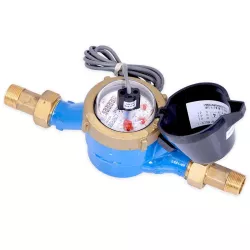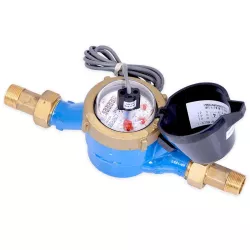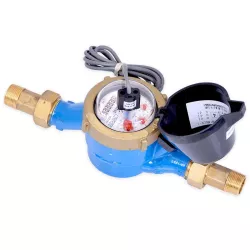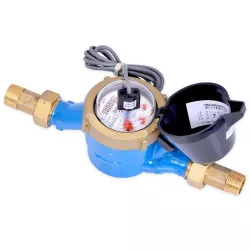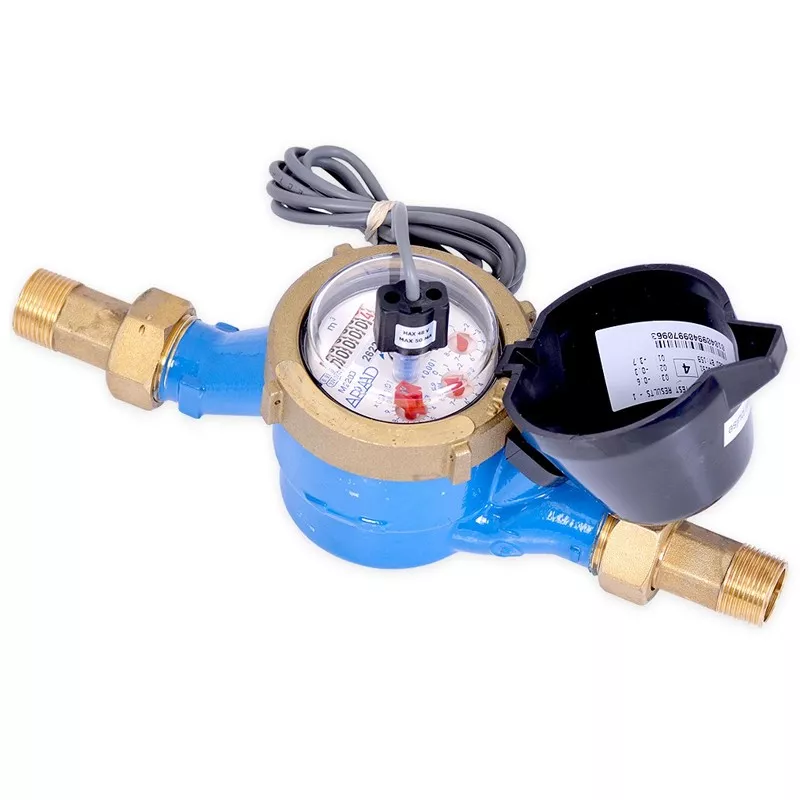


If you are looking for meters with a ratio of 1 liter = 1 pulse, please contact us.
Technical characteristics
A pulse-emitting counter is ideal for controlling the amount of product dispensed into a volume of water.
It is typically used for product dosing, based on the volume of water passing through the pipe, which is monitored by the meter.
Since the goal is to dose the product, the meter is “programmed” to inject the product at a specific number of pulses. Once the meter has been “programmed” with the pulse settings, it sends an electrical signal to the dosing pump to inject the corresponding product.
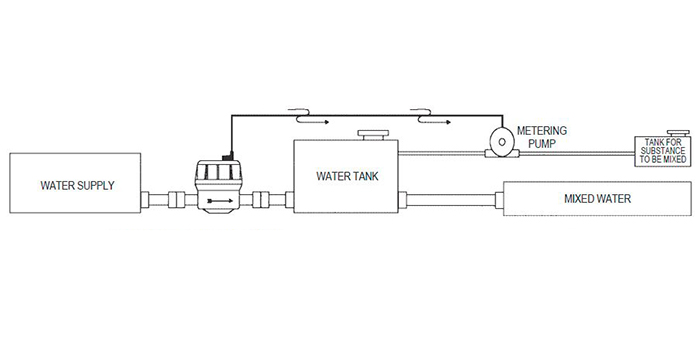
If, for example, the product were liquid chlorine, we would have to test how many pulses are needed to inject enough of the product to achieve an optimal chlorine level.
To install the meter, the following rule must be followed: a straight pipe run of 8 times the meter’s nominal diameter upstream and 6 times the nominal diameter downstream.
Verified Reviews

Might Also like